Lead Gen Agency vs Pay-Per-Lead: What Web Designers Should Actually Pay in 2026
Compare lead gen agency costs to pay-per-lead in 2026. What web designers actually pay, and why pay-per-lead is the lower-risk starting point.
Founder of Fludi Leads and Hempsall Digital. Seven years building websites for UK small businesses.
A lead gen agency typically charges a monthly retainer of £2,000 to £8,000, a fixed fee per qualified lead, or a percentage of ad spend. Retainers buy you consistency but you pay whether or not leads show up. Pay-per-lead shifts the risk to the provider but quality varies. For a solo web designer or small studio, a pay-per-lead platform is usually the lower-risk way to start, before committing to a retainer.
Why This Decision Matters More for Web Designers Than Most Businesses
If you are a freelance web designer or run a small studio, you do not have a sales team. You do not have a marketing budget that can absorb a bad month. Every pound spent on lead generation needs to turn into a conversation with a real prospect, fast, because you are also the person delivering the work.
That is a different calculation to a mid-market SaaS company weighing up a £15,000-a-month retainer. So before signing anything, it is worth understanding exactly what a lead gen agency sells, what it costs, and where the model can work against you.
How Lead Gen Agencies Actually Price Their Services
There is not one standard price. Agencies use four main models, and each one carries a different risk profile.
Monthly Retainer
This is the most common structure. You pay a fixed fee, usually running from roughly £2,000 at the small end up to £10,000 or more for a premium, multi-channel setup. Budget agencies tend to sit around £2,000 to £3,500 a month for basics like campaign management and landing page work, while mid-tier agencies handling several channels typically land between £5,000 and £8,000.
The appeal is predictability. The risk is that you are paying regardless of outcome, so contracts need clear reporting and performance benchmarks built in from day one.
Pay-Per-Lead
Here you only pay for leads that meet an agreed definition. Pricing swings enormously by industry: a home services lead might run £20 to £60, while a legal or financial services lead can hit £150 to £400 or more, reflecting how valuable that client could be. This model puts the delivery risk on the agency, which sounds appealing, but watch for how "qualified" is defined. Some providers optimise for volume over relevance once they are paid per lead regardless of whether it converts.
Percentage of Ad Spend
Some agencies take 10 to 20% of your total ad budget as a management fee. It aligns their incentive with how much you spend, not necessarily with your results, so it works best paired with clear conversion targets rather than used alone.
Hybrid
A smaller base retainer plus performance bonuses tied to lead quality or conversion. Often the most balanced option, since the agency has both a stable income and skin in the game.
The Real Numbers for 2026
Across the wider market, B2B lead generation retainers commonly run £2,500 to £20,000 a month depending on scope, with appointment-setting services priced separately at roughly £250 to £2,000 per booked meeting. Per-lead pricing for B2B tends to average somewhere in the £30 to £150 range depending on how competitive the niche is, climbing well beyond that for regulated or high-value sectors like finance and law.
The uncomfortable truth buried in most of this pricing is margin. Agency retainers commonly run at 30 to 60% gross margin, meaning a chunk of what you pay covers overheads rather than direct campaign work. That is not necessarily a problem: it is how service businesses operate. But it is worth knowing when you are comparing a £3,000 retainer against a platform that charges per delivered lead.
Where Web Designers Get Caught Out
Three patterns show up repeatedly when small studios hire a generalist lead gen agency:
- Minimum commitments. Most retainer contracts lock you in for 3 to 12 months, which is a long time to discover the leads are not relevant to web design specifically.
- Vague lead definitions. "Qualified lead" can mean anything from a form fill to a decision-maker who has actually said yes to a call. Get this defined in writing before you pay anything.
- Generic targeting. A general-purpose agency running outbound for a web design client is not necessarily looking for the one signal that actually matters here: a business that is established, has real reviews, but has no functioning website. That is a very specific filter, and it is one most retainer-based agencies are not built around.
This is exactly why I built Fludi Leads rather than paying a lead gen agency to do it for me. As a solo operator, I do not have the time or the budget for a retainer, and I did not want to wait for someone else's process to bed in. I wanted to pull a list of relevant prospects and be on the phone within a minute, not after a month of onboarding calls.
That is also why the export format matters: leads are delivered as a CSV you can import directly into a spreadsheet, CRM, or dialler, no manual copying from a web interface.
Find your next clients in minutes
Enter a trade and a location to see how many local businesses have no website, a social-only presence, or a lapsed site. You see the count and price before paying anything.
Get my leads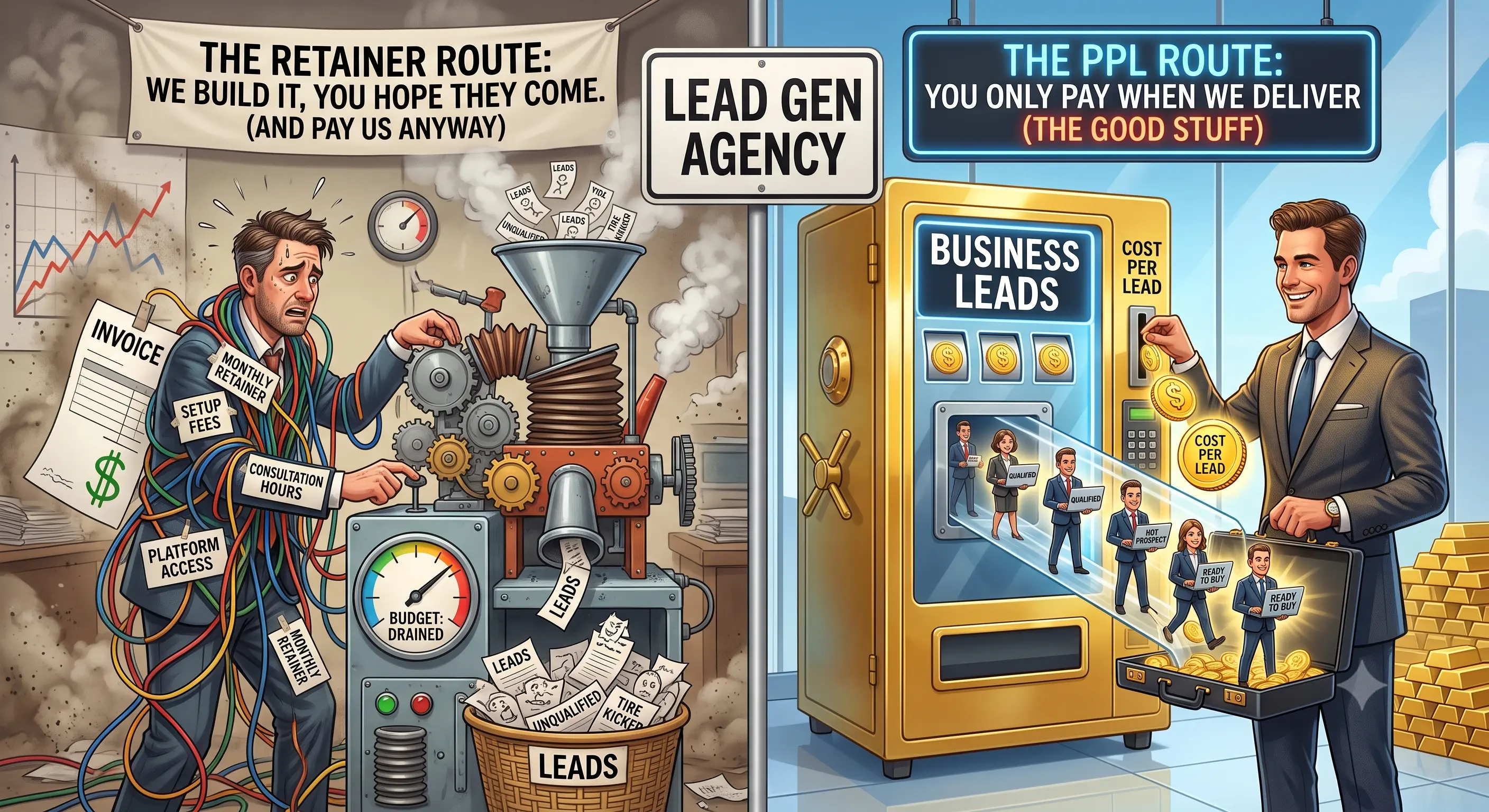
A Lower-Risk Starting Point: Pay-Per-Lead, Built on One Specific Filter
This is the gap Fludi Leads was built to close. Instead of a generalist agency retainer, it searches Google's official Places API by niche and location and returns businesses that are established and well-reviewed but have no website, or rely on a social page only. No scraping, no grey-area data sourcing: just Google's own business data.
Pricing is pay-per-lead with no subscription: a flat £0.50 per lead, however many you order. You see the exact count and price before paying, and delivery is instant, on screen and by email. There is no retainer, no minimum term, and no risk of paying for a month of strategy before a single lead arrives.
For a solo designer testing whether a location or niche has enough prospects worth chasing, that is a materially different risk profile to a £3,000-a-month agency contract. See the full cost per lead breakdown for how the numbers stack up side by side.
How to Decide Between the Two
If you need ongoing, multi-channel outbound at volume, and you have the budget to absorb a slow month or two while an agency's process beds in, a retainer-based lead gen agency can make sense. If you are a solo designer or small studio wanting a specific, verifiable pool of prospects, established local businesses with no website, without a monthly commitment, pay-per-lead is the lower-risk way to start.
Where do I find web design leads without hiring an agency?
Fludi Leads searches Google Maps live and returns local businesses with no website in any town or industry, anywhere in the world. You get name, phone number, address, review count, and social link in a single report, at a flat £0.50 per lead. No retainer, no minimum term: pay only for what you take.
Is there a free tool to help me script my cold outreach?
Yes. The free cold call script generator on this site has industry-specific scripts for roofers, plumbers, electricians, salons, gyms, restaurants and more. Each one is built around the no-website hook and includes objection responses. No account required.
What are the typical pricing models for lead generation agencies?
Four models cover most of the market: a monthly retainer (roughly £2,000–£10,000+, paid regardless of results), pay-per-lead (£20–£400+ per lead depending on industry), a percentage of ad spend (typically 10–20%), and hybrid deals combining a smaller retainer with performance bonuses. Retainers buy predictability; pay-per-lead and hybrid models shift more of the delivery risk onto the agency.
Are pay-per-lead agencies worth it for B2B companies?
For B2B generally, it depends on how tightly the agency defines a 'qualified' lead, since a loose definition can mean paying full price for contacts that never had real buying intent. It works best when the targeting signal is specific and verifiable, an established business with a public digital gap, for example, rather than a generic firmographic filter. That specificity is what determines whether pay-per-lead actually beats a retainer for a given B2B use case.
What should a qualified lead mean in a contract?
Get this defined explicitly before signing anything: does it mean a form fill, a verified contact, or a confirmed meeting? Vague definitions are the single biggest source of disputes with lead gen agencies. The more specific the definition, including industry, location, and buying signals, the more useful the leads will actually be.
Do lead gen agencies work for web designers specifically?
Generalist agencies can work, but they are rarely built around the specific signal that matters most for web design prospecting: an established, well-reviewed local business with no functioning website. Most retainer-based agencies cast a wider net than that, which can mean paying for leads that were never a realistic fit. A niche platform built around that exact filter, like Fludi Leads, tends to produce more relevant results for less spend.
Can I try pay-per-lead before committing to a retainer?
Yes, and for most solo designers it is the sensible order. A pay-per-lead platform lets you test whether a particular niche or location has enough prospects worth pursuing before you commit to a monthly retainer. Fludi Leads shows you the exact number of qualifying businesses in any area before you pay, so you can make that call with real data rather than a sales pitch.